Installing an EV charger at home is an exciting step, but in New Zealand the electrical work involved is largely restricted work that must be carried out by a licensed electrician. The short answer: you can plug in a portable charger yourself, but any fixed wiring or new circuit installation must be done by a qualified professional.
What Type of EV Charging Can You DIY?
There are broadly three levels of home EV charging:
| Level | Type | Typical Speed | DIY Allowed? |
|---|---|---|---|
| Level 1 | Standard 3-pin plug (10A) | ~10–15 km/hr | Yes — plug in yourself |
| Level 2 | Dedicated EVSE unit (32A circuit) | ~30–50 km/hr | No — restricted electrical work |
| Level 2+ | Three-phase supply | Faster again | No — restricted electrical work |
Level 1 charging uses a standard household outlet. If a suitable, safe outlet already exists in your garage or carport, you can simply plug in a manufacturer-supplied portable EVSE (Electric Vehicle Supply Equipment) cable yourself — no electrical work required.
Level 2 charging involves installing a dedicated wall-mounted charger (sometimes called a home charging unit or EVSE). This requires a new circuit, appropriate cabling, a dedicated circuit breaker, and often an upgraded switchboard. All of this is restricted electrical work under the Electricity Act 1992 and must be carried out by a registered electrician.
Why Is It Restricted Work?
Under New Zealand law, any work that involves connecting to, or modifying, fixed electrical wiring in your home is restricted electrical work. Only people registered with the Electrical Workers Registration Board (EWRB) are legally permitted to carry out and certify this work.
Doing restricted electrical work yourself — or hiring an unregistered person — is illegal and can result in:
- Fines under the Electricity Act
- Voided home insurance if a fault or fire occurs
- Failed building or electrical inspections
- Serious risk of electric shock, fire, or damage to your vehicle
Always ask your electrician for a Certificate of Compliance (CoC) once the work is complete. This is your legal proof the installation meets the New Zealand Wiring Rules (AS/NZS 3000).
What Does a Typical Home EV Charger Installation Involve?
A licensed electrician will assess and carry out:
- Switchboard capacity check — your existing board may need upgrading to handle the additional load
- Dedicated circuit installation — a new circuit (typically 32A) run from the switchboard to the charger location
- Earthing and protection — correct RCD (residual current device) protection is required
- Charger mounting and connection — the EVSE unit is fixed to the wall and wired in
- Issuing a Certificate of Compliance
Depending on your home's existing wiring and switchboard, the job can usually be completed in a few hours, though older homes may need more extensive work.
Do You Need a Building Consent?
In most cases, installing a home EV charger does not require a building consent — it typically falls under Schedule 1 exemptions of the Building Act 2004. However, this can depend on your specific situation (for example, if structural work to a garage is involved). Always confirm with your local council before starting any work. You can find general guidance at MBIE Building Performance.
Does Your Switchboard Need Upgrading?
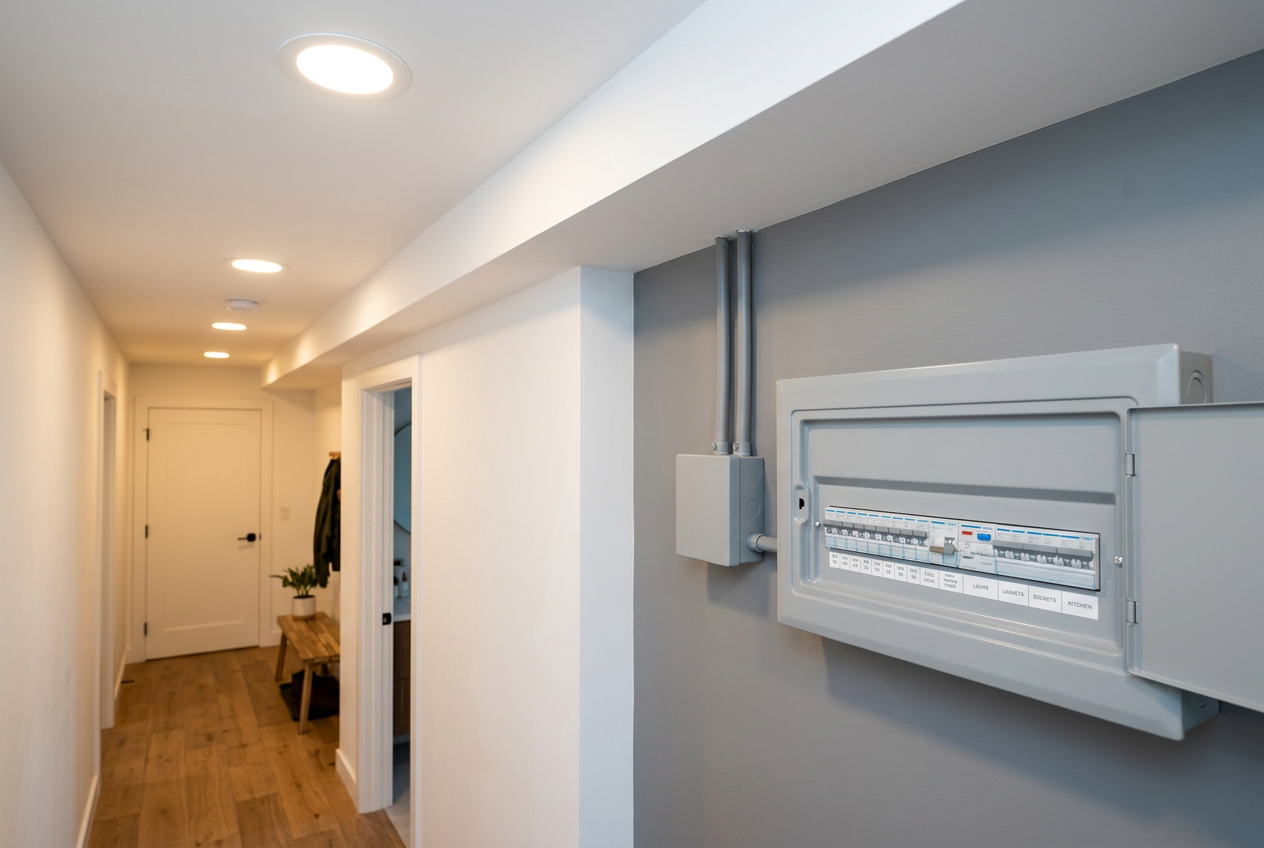
Many New Zealand homes — particularly those built before the 1990s — have older switchboards with ceramic fuses or limited capacity. A dedicated EV charger circuit draws significant continuous load, and your electrician will check whether your switchboard can safely handle this. If an upgrade is needed, factor this into your budget. As a rough guide only, switchboard upgrades can add several hundred to over a thousand dollars to the overall cost.
Choosing the Right Charger
When selecting an EVSE unit, look for products that:
- Are certified to relevant safety standards (check the product documentation)
- Are compatible with your vehicle's connector type (most NZ EVs use Type 2)
- Have smart/Wi-Fi features if you want to take advantage of off-peak electricity rates
Your electrician can advise on suitable units. You can also browse options at retailers like Bunnings or Mitre 10, though supply of dedicated EVSE units through specialist EV or electrical suppliers is often broader.
For tips on reducing running costs, Energywise has useful guidance on EV charging and home energy efficiency.
Safety Note
Never attempt to modify your switchboard, run new cabling, or wire in a charger yourself. Even if you feel confident, the risks — electric shock, fire, and legal liability — are serious. Always use a registered electrician and obtain your Certificate of Compliance.
When to Call a Professional
You should engage a licensed electrician for any EV charger installation that goes beyond plugging into an existing outlet. This includes:
- Installing a dedicated wall-mounted EVSE unit
- Running new cabling from your switchboard
- Upgrading your switchboard or adding a new circuit breaker
- Installing outdoor weatherproof outlets for charging
You can find qualified, local electricians on tradedirectory.co.nz. Make sure any electrician you hire is registered — you can verify their registration at the EWRB.