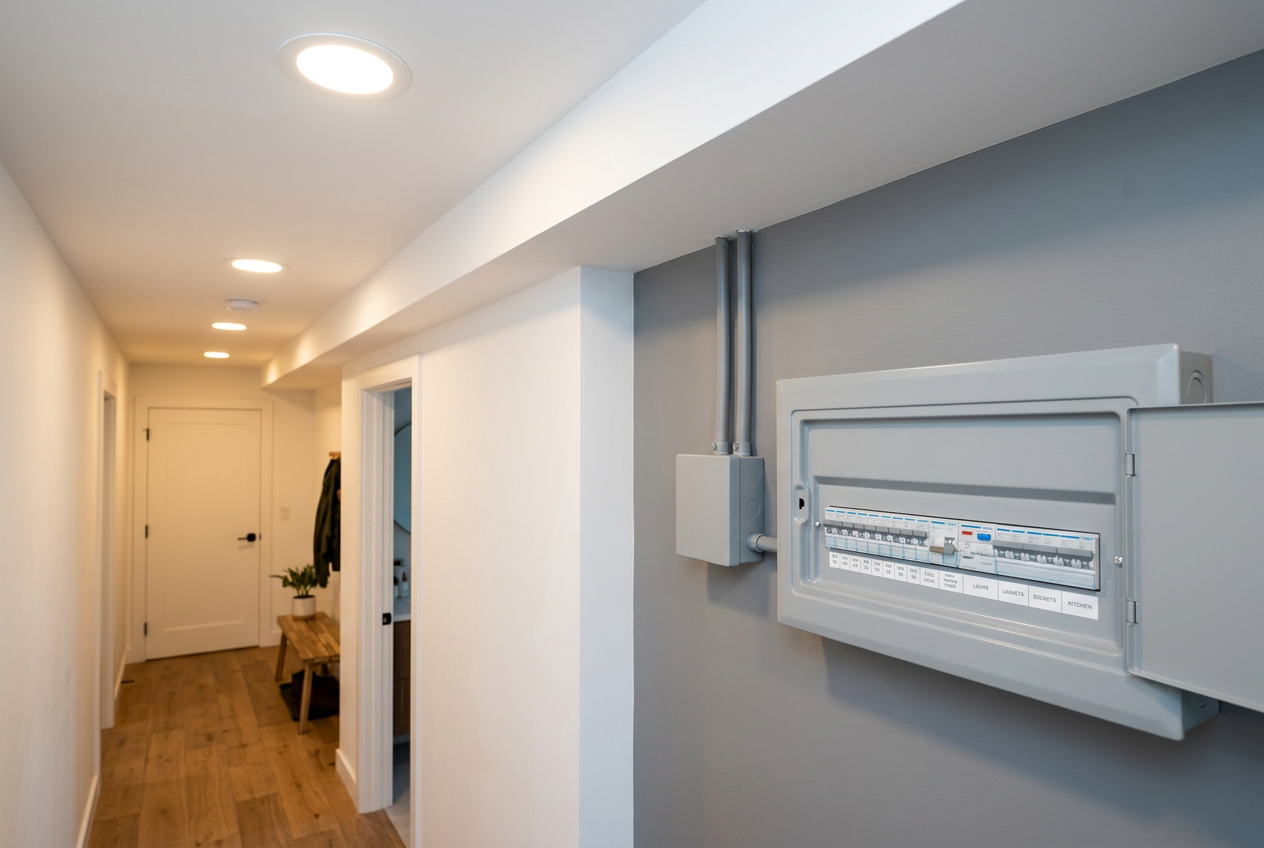
The short answer is no — installing a second switchboard (also called a sub-board or distribution board) in your garage is restricted electrical work under New Zealand law, and it must be carried out by a registered electrician. Attempting it yourself is illegal, potentially dangerous, and could void your home insurance. Here's everything you need to know before you start planning your garage electrical upgrade.
Why This Is Restricted Work
Under the Electricity Act 1992 and the Electricity (Safety) Regulations 2010, any work that involves connecting to, modifying, or installing a switchboard or distribution board is classified as restricted electrical work. This applies whether it's your main switchboard or a secondary sub-board fed from it.
Only a person registered with the Electrical Workers Registration Board (EWRB) is legally permitted to carry out this work. Once complete, the electrician must issue you a Certificate of Compliance (CoC) — your proof that the installation meets the required safety standards. Without a CoC, you may face issues with insurance claims, future property sales, or council inspections.
What Does Installing a Garage Sub-Board Actually Involve?
A garage sub-board installation is more involved than it might look. A registered electrician will typically need to:
- Assess your existing main switchboard to confirm it has capacity for an additional circuit to feed the sub-board
- Run a suitably rated cable (often 6 mm² or larger, depending on the load) from the main board to the garage
- Install the sub-board enclosure with appropriate circuit breakers and, where required, residual current devices (RCDs)
- Ensure earthing and neutral arrangements comply with NZS 3000:2018 (the Wiring Rules)
- Apply for a building consent if structural work is involved, or confirm the work falls under a Schedule 1 exemption — always check with your local council
- Issue a Certificate of Compliance on completion
The cable route — whether underground, through the roof space, or surface-mounted — will also affect the complexity and cost of the job.
Does This Require a Building Consent?
The electrical work itself doesn't usually require a separate building consent, but the broader garage project might. For example, if you're converting a garage into a habitable room or workshop with significant alterations, a consent may be needed. MBIE Building Performance has guidance on what triggers a consent, but always confirm with your local council, as requirements can vary.
What Can a Homeowner Do?
While you can't touch the switchboard or any wiring yourself, there are tasks you can legally do to prepare and save on labour costs:
- Plan the layout of your garage circuits — decide where you want power points, lighting, and any dedicated circuits (e.g., for a welder, EV charger, or compressor)
- Install conduit or cable trunking (without pulling wire through it) so the electrician can run cables more efficiently
- Clear the work area and ensure safe, easy access to the main switchboard and the garage
- Discuss your future needs with the electrician upfront so the sub-board is sized correctly from the start
Sizing Your Sub-Board — Think Ahead
It pays to think about what you'll eventually want to run in your garage. Common circuits to consider include:
| Circuit Type | Typical Breaker Size | Notes |
|---|---|---|
| General power points | 16–20 A | Standard double GPOs |
| Lighting | 10–16 A | LED lighting is efficient |
| Workshop equipment | 20–32 A | Lathes, compressors, welders |
| EV charger | 32 A | Dedicated circuit usually required |
| Heat pump / air con | 16–20 A | Check manufacturer specs |
Tell your electrician about any high-draw equipment you plan to use. It's far cheaper to install a larger sub-board now than to upgrade it later.
Safety Note
Working inside a switchboard — even with the main breaker off — can expose you to live conductors from the incoming supply (the service fuse and meter tails remain live regardless). This is a genuine electrocution risk. WorkSafe NZ is clear that electrical safety is not an area to cut corners. Please don't attempt any part of this work yourself.
How Much Does It Cost? (Rough Guide)
As a very broad guide, a straightforward garage sub-board installation by a registered electrician might range from around $800 to $2,500+, depending on the distance from the main board, cable routing complexity, number of circuits, and your region. Always get at least two or three quotes.
When to Call a Professional
For this job, calling a professional isn't just good advice — it's the law. You need a registered electrician for all of the following:
- Installing or modifying any switchboard or distribution board
- Running new circuits from an existing board
- Any work inside your main switchboard
- Installing a dedicated circuit for an EV charger or high-draw appliance
You can find qualified, local registered electricians on tradedirectory.co.nz. Always ask to see their EWRB registration and request a Certificate of Compliance on completion of the work.