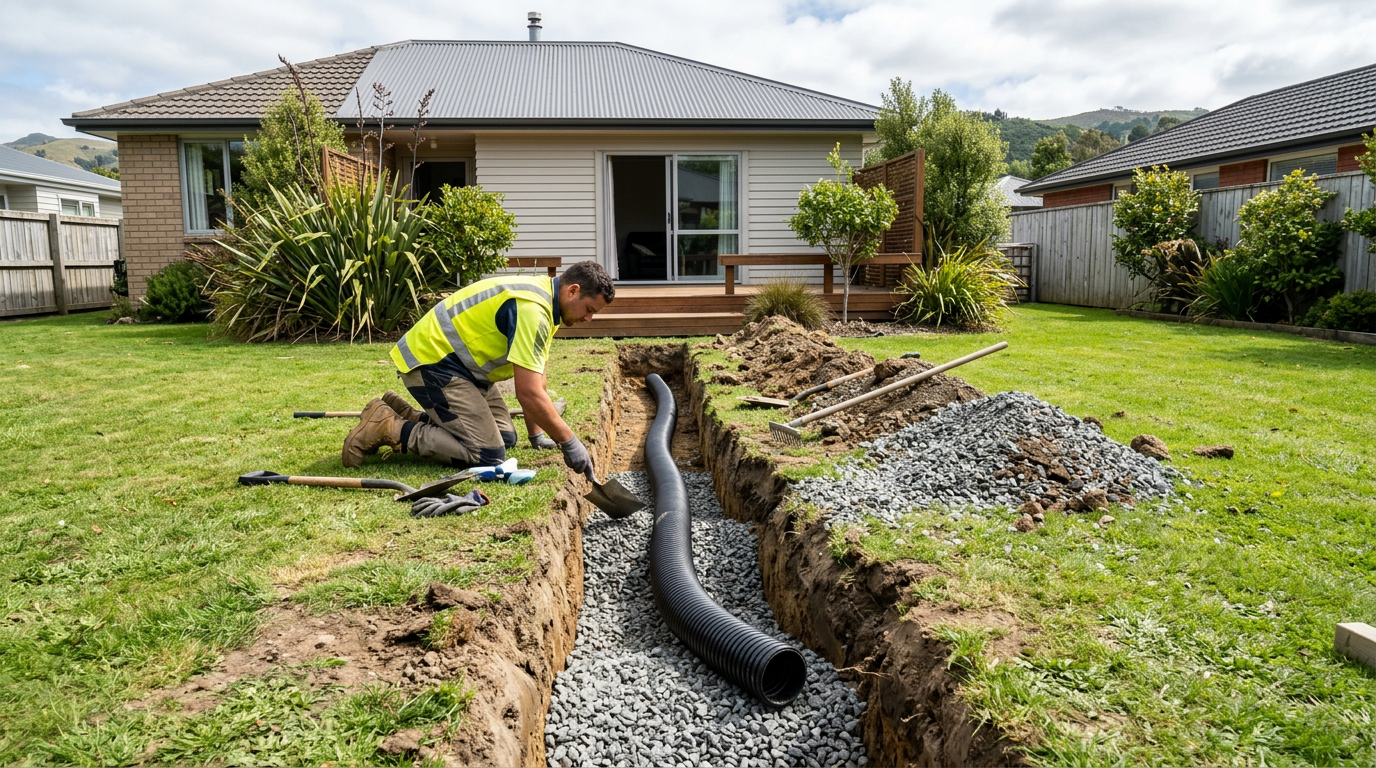
Yes, in most cases a NZ homeowner can hire a mini excavator and level their own backyard without needing a formal operator's licence — but that doesn't mean you can simply jump in the cab and start digging. There are real risks around underground services, ground stability, building consent requirements, and machine safety that you need to understand before you begin. Read on for a practical guide to doing this job safely and legally.
Do You Need a Building Consent?
This is the first question to answer before you touch a single sod. In New Zealand, earthworks can trigger a building consent requirement under the NZ Building Code, depending on the volume of material moved and the slope of your land.
As a general guide, Schedule 1 of the Building Act 2004 exempts minor earthworks, but the thresholds vary and your local council has the final say. Some councils have their own district plan rules around cut and fill, retaining walls, and stormwater effects. If you're planning to cut or fill more than around 50 m³, or if your site is on a slope, near a boundary, or in a flood-sensitive area, check with your council before you hire the machine. You can find general guidance on consent requirements at MBIE Building Performance.
Locate Underground Services First — This Is Critical
Before any excavation, you must identify the location of all underground services on your property. Striking a gas line, water main, or electrical cable can be fatal and is extremely costly to repair.
- Contact Dial Before You Dig (0800 248 344 or dialbeforeyoudig.co.nz) to request a service location plan for your address.
- Allow several working days for the information to come through.
- Even with plans in hand, hand-dig carefully around any marked service corridors — plans are indicative and services are not always exactly where shown.
- Check with your local council or network utility operator for any public stormwater or wastewater pipes that may cross your section.
WorkSafe NZ has clear guidance on excavation safety that applies to homeowners and contractors alike.
Choosing the Right Mini Excavator
Mini excavators (typically 1–5 tonne) are well suited to residential backyards. When hiring, consider:
| Factor | What to look for |
|---|---|
| Machine weight | Lighter machines (1–2 t) cause less lawn damage and fit through standard gates |
| Bucket width | Match to the work — a wider bucket moves more soil per pass |
| Dig depth | Most minis reach 2–2.5 m, more than enough for levelling |
| Rubber tracks | Preferred over steel tracks on lawns and paving |
| Hire company support | Choose a company that offers a brief operator induction |
Hire companies such as those listed on Bunnings or local equipment hire yards will typically provide a safety induction when you collect the machine. Take this seriously — ask questions and don't leave until you're confident with the controls.
Do You Need a Licence to Operate a Mini Excavator?
In New Zealand, there is no legal requirement for a private individual to hold a formal excavator operator's licence to use a machine on their own property. However, if you are doing this as part of a commercial or workplace activity, WorkSafe NZ Health and Safety at Work Act obligations apply.
That said, competence matters enormously. Mini excavators can tip over on slopes, damage foundations, and cause serious injury if misused. If you have no prior experience, strongly consider hiring a qualified earthmoving contractor for at least the tricky parts of the job.
Planning Your Levelling Work
- Establish a datum level — use a builder's level or laser level to mark your desired finished height across the yard.
- Calculate cut and fill — try to balance the amount of soil you cut from high spots with what you fill into low spots to minimise spoil removal costs.
- Topsoil management — strip and stockpile your topsoil first, then work the subgrade, and re-spread topsoil at the end.
- Drainage — ensure your finished level directs surface water away from the house and doesn't pond near boundaries. NZ Building Code clause E1 (Surface Water) requires that earthworks don't adversely affect neighbouring properties.
- Compaction — filled areas must be properly compacted in layers (typically 150–200 mm lifts) or they will settle unevenly. A plate compactor, available from the same hire yard, is essential.
Safety on the Machine
- Never operate on slopes steeper than the manufacturer's rated limit (check the operator's manual).
- Keep bystanders — especially children — well clear of the working area at all times.
- Never swing the boom over people.
- Be aware of overhead powerlines; maintain safe clearance distances as required by WorkSafe NZ.
- Wear appropriate PPE: hard hat, hi-vis vest, steel-capped boots, and gloves.
- If the machine starts to tip, do not jump — stay in the cab with your seatbelt on.
Disposing of Spoil
If you have excess soil to remove, arrange a skip bin or truck-and-trailer beforehand. Check with your local council about whether fill soil can be taken to a transfer station or if it needs to go to a consented fill site.
When to Call a Professional
Consider hiring a qualified earthmoving contractor (you can find local operators on tradedirectory.co.nz) if:
- Your site is on a significant slope or has unstable soils.
- You need to work close to the house foundations, retaining walls, or boundary fences.
- The job requires a building consent or engineering input.
- You have no prior experience operating heavy plant.
- Underground services are complex or poorly documented.
A professional earthmover will also have public liability insurance, which a DIY hire generally does not cover for third-party damage.