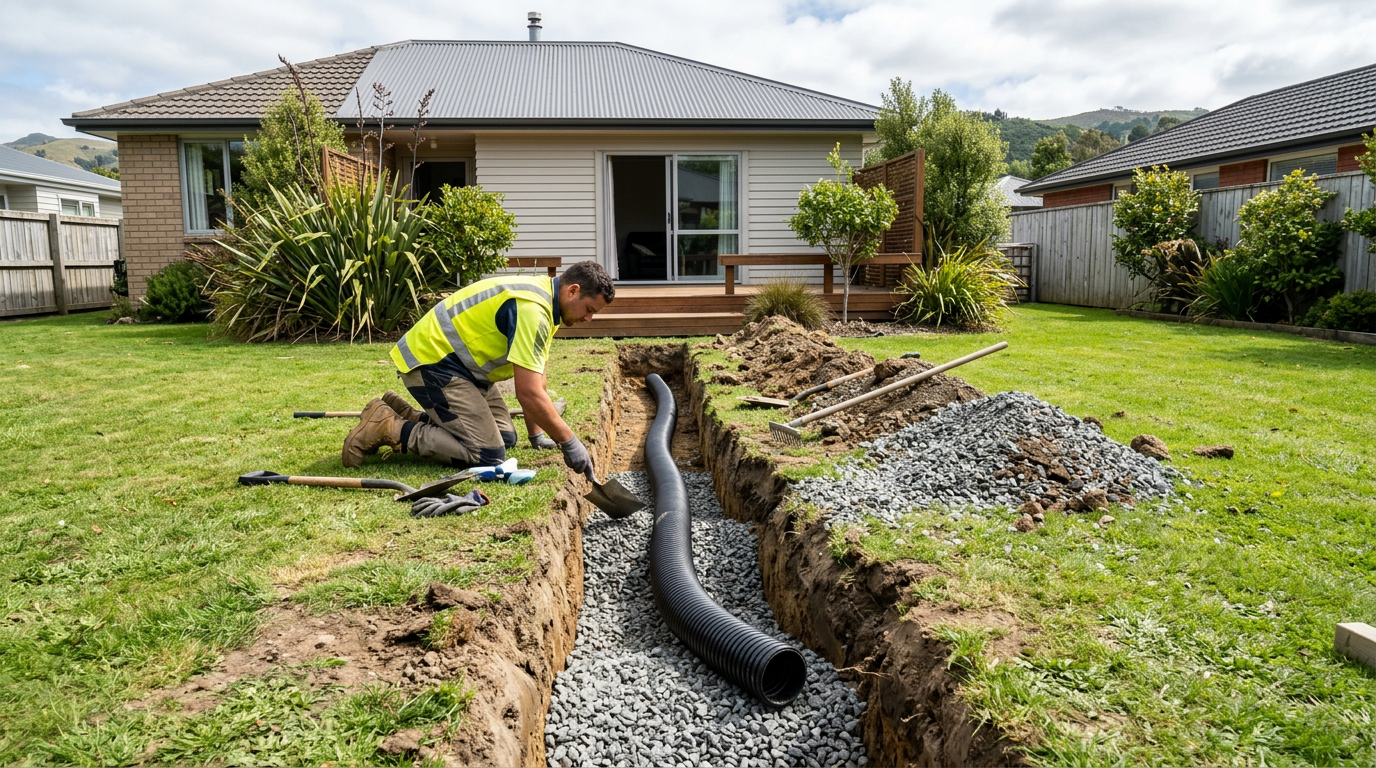
Yes, in most cases you can hire a mini excavator and dig a foundation trench yourself as a homeowner — but before you fire up the machine, there are some important legal, safety, and practical considerations to work through. Getting these right from the start will save you time, money, and potentially a very costly mistake.
Do You Need a Building Consent First?
In almost all cases, yes — a building consent is required before you dig foundations. Foundation work is structural and must comply with the NZ Building Code, including the structural requirements set out under standards like NZS 3604 for timber-framed buildings. Digging without consent can result in stop-work orders, fines, and serious complications when you come to sell the property.
Some very minor exemptions exist under Schedule 1 of the Building Act, but these rarely apply to foundation trenches for habitable structures. Always confirm with your local council before breaking ground. Your council's building department can tell you exactly what consents and inspections are required for your specific project.
Checking for Underground Services — Critical Safety Step
Before any excavation, you are legally and practically obligated to identify underground services. Striking a gas line, water main, or power cable can be fatal and will be extremely expensive to repair.
- Contact Dial Before You Dig (0800 248 344 or dialbeforeyoudig.co.nz) to get plans of known underground services in your area.
- Check with your local council and network utility operators for water, stormwater, and wastewater pipes.
- Remember that service plans are not always 100% accurate — hand-dig carefully near any marked services.
WorkSafe NZ has clear guidance on excavation safety, including requirements for safe working near underground utilities. Do not skip this step.
Choosing the Right Mini Excavator
Mini excavators (typically 1–5 tonne) are well suited to residential foundation trenches and can be hired from most plant hire companies around NZ. When choosing a machine, consider:
| Factor | What to Consider |
|---|---|
| Machine weight | Heavier machines can damage driveways and soft ground |
| Bucket width | Match to your required trench width (check your engineer's specs) |
| Access | Can the machine physically get to the dig site? |
| Depth | Most mini excavators reach 2–2.5 m — check this suits your trench depth |
| Attachments | A narrow trenching bucket may be more useful than a standard bucket |
Hire companies will usually give you a brief induction on operating the machine. If you have no experience, ask about operator training or consider hiring a machine with an operator — it may save time and reduce risk.
Trench Safety and Shoring
This is where many DIYers underestimate the danger. Trench collapse is a leading cause of serious injury and death on construction sites. Even a shallow trench can collapse without warning, especially in sandy, loose, or wet soils.
WorkSafe NZ requires that any trench deeper than 1.5 metres must be shored, battered back, or otherwise made safe before anyone enters. Key rules:
- Never enter an unshored trench deeper than 1.5 m.
- Batter (slope) the trench sides if space allows — typically at least a 1:1 slope in unstable soils.
- Keep excavated spoil at least 1 metre back from the trench edge.
- Have a means of escape from the trench at all times.
Soil and Foundation Requirements
Your foundation design must be based on actual site conditions. A geotechnical assessment may be required by your council or structural engineer, particularly on sloped sites, in areas with expansive or compressible soils, or in TC2/TC3 land in Canterbury. Your building consent documents will specify the required trench dimensions, depth, and bearing capacity.
Do not assume the trench dimensions from a plan — always work from your engineer-approved drawings and have the council inspector sign off the trench before you pour any concrete.
What Work Is Restricted?
While the excavation itself is not restricted work, several tasks that follow are:
- Plumbing and drainlaying within the trench (e.g., foundation drainage, sewer connections) must be done by a licensed tradesperson registered with the Plumbers, Gasfitters and Drainlayers Board.
- Electrical work near or within the excavation is restricted under the Electricity Act and must be carried out by a registered electrician — check the Electrical Workers Registration Board.
- Structural concrete work may require inspection by a licensed building practitioner — see LBP for details.
When to Call a Professional
Hiring a professional excavator operator is strongly recommended if:
- You have no experience operating excavation machinery.
- The site has restricted access, steep slopes, or is near existing structures.
- Underground services are present and locations are uncertain.
- The trench is deeper than 1.5 metres.
- Your soil conditions are unusual (fill, peat, high water table).
- You simply want the job done quickly and correctly.
A qualified excavator operator will work efficiently, understand trench safety, and can often spot problems before they become expensive. You can find experienced local excavation contractors on tradedirectory.co.nz.