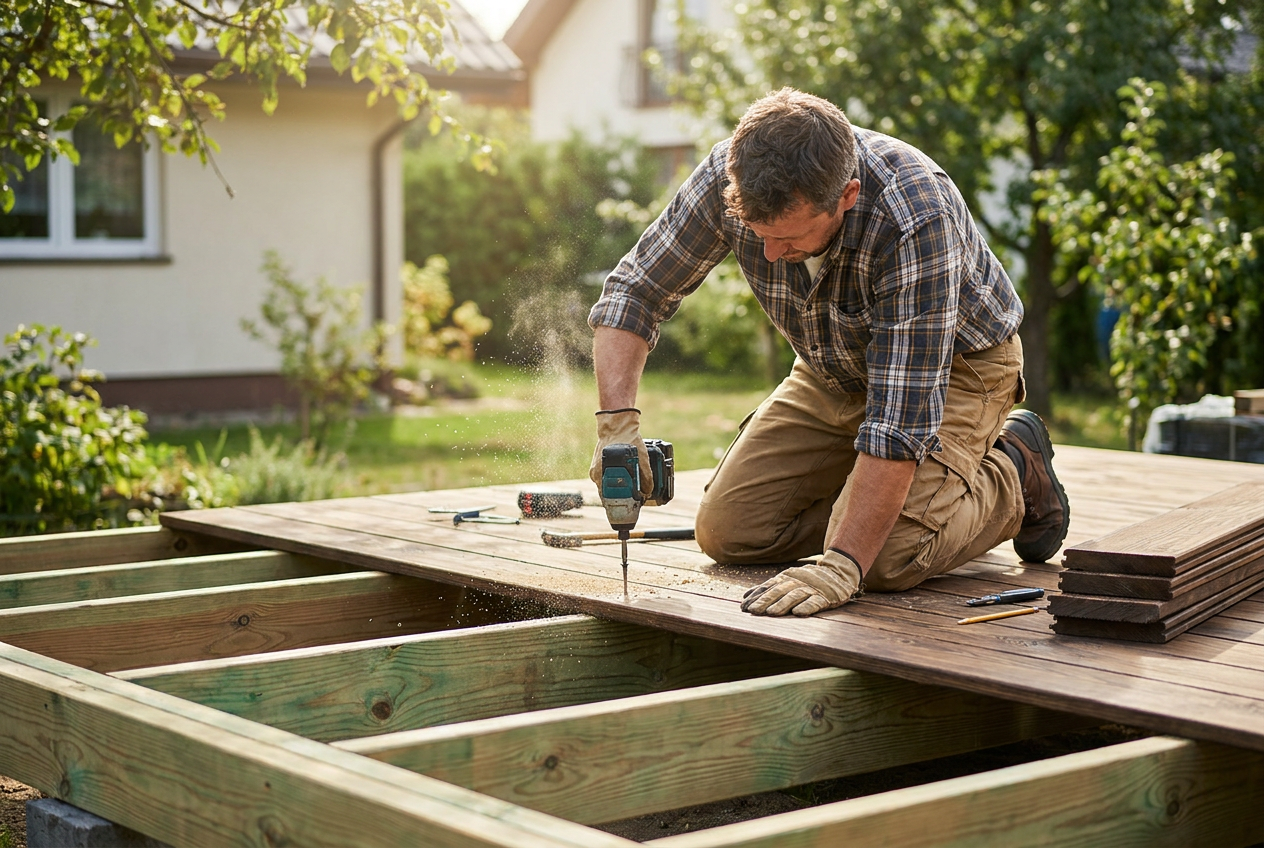
The short answer is: it depends. In New Zealand, homeowners can carry out some exterior cladding work themselves under the owner-builder exemption, but most cladding projects require a building consent, and certain work must be done — or supervised — by a Licensed Building Practitioner (LBP). Getting this wrong can affect your Code Compliance Certificate, your insurance, and the long-term weathertightness of your home.
Understanding the Owner-Builder Exemption
Under the Building Act 2004, an owner-builder is someone who owns and lives in (or intends to live in) the home they are working on. Owner-builders are permitted to carry out or supervise certain building work on their own home without being an LBP — but this exemption has clear limits.
Key conditions include:
- You must own and occupy (or intend to occupy) the dwelling.
- You cannot have used the owner-builder exemption on another property in the previous three years.
- The work must not be restricted building work (RBW).
Always confirm your eligibility with your local council before starting.
What Is Restricted Building Work?
Restricted building work is work that is critical to the structural integrity or weathertightness of a home. Under New Zealand law, RBW must be carried out or supervised by a licensed LBP with the relevant licence class.
Exterior cladding almost always falls under RBW because it is directly related to weathertightness — one of the core requirements of the NZ Building Code, specifically Clause E2 (External Moisture). This means:
- Installing or replacing primary cladding systems (e.g., fibre cement, weatherboard, brick veneer, plaster systems) is restricted building work.
- An LBP holding a Carpentry or Cladding licence class must carry out or supervise this work and provide a Record of Work on completion.
If you do this work yourself without an LBP, your council may refuse to issue a Code Compliance Certificate (CCC), and your home insurer may decline claims related to weathertightness failures.
Do You Need a Building Consent?
Most exterior cladding work requires a building consent. Schedule 1 of the Building Act lists exemptions, but re-cladding or significantly altering the exterior envelope of a house is generally not exempt. Like-for-like repairs of small areas may sometimes be exempt, but this is not guaranteed — always check with your local council before assuming no consent is needed.
For guidance on what work is exempt, MBIE Building Performance publishes helpful guidance documents online.
Common Cladding Types and Considerations
| Cladding Type | Typical LBP Class Required | Notes |
|---|---|---|
| Fibre cement (e.g., James Hardie) | Carpentry or Cladding | Must follow manufacturer's specific installation requirements |
| Weatherboard (timber or composite) | Carpentry | Jointing, priming, and fixing details are critical |
| Plaster/EIFS systems | Cladding | High weathertightness risk; specialist knowledge essential |
| Brick veneer | Carpentry / Mason | Structural ties and cavity details are critical |
| Metal cladding | Carpentry or Cladding | Flashings and penetrations must be correct |
Manufacturers like James Hardie publish detailed installation guides, and councils will expect these to be followed precisely as part of consent conditions.
What Can a Homeowner Do Themselves?
While the primary cladding installation is restricted, there are supporting tasks a capable homeowner may be able to do (subject to consent conditions and council approval), such as:
- Removing old cladding (with care — check for asbestos in homes built before the 1990s; see WorkSafe NZ for guidance).
- Painting the finished cladding using quality exterior paints from suppliers like Resene or Dulux.
- General site preparation and clean-up.
Always clarify with your LBP and council exactly which tasks you can assist with under supervision.
Asbestos: A Critical Safety Warning
If your home was built or renovated before 1990, there is a real possibility that existing cladding or underlay materials contain asbestos. Do not disturb these materials until they have been tested by a qualified professional. Removal of asbestos-containing material is regulated under the Health and Safety at Work (Asbestos) Regulations 2016. WorkSafe NZ has full guidance on your obligations.
Weathertightness and the NZ Building Code
New Zealand's leaky building crisis of the 1990s and 2000s was a costly reminder of what happens when cladding is installed incorrectly. Clause E2 of the Building Code sets out requirements for external moisture management, including cavity systems, flashings, and junctions around windows and doors. BRANZ provides excellent technical research and guidance on best-practice weathertightness detailing.
Getting these details right is not just about passing inspection — it protects your home's value and your family's health.
When to Call a Professional
For virtually all exterior re-cladding projects, you should engage a qualified tradesperson. Specifically:
- Any primary cladding installation or replacement requires an LBP with the appropriate licence class.
- If you are unsure whether your project is restricted building work or requires consent, consult your local council or an LBP before lifting a tool.
- For asbestos removal, engage a licensed asbestos removalist.
You can find qualified, local builders and cladding specialists on tradedirectory.co.nz. Always ask to see their LBP licence number and check it on the LBP register.