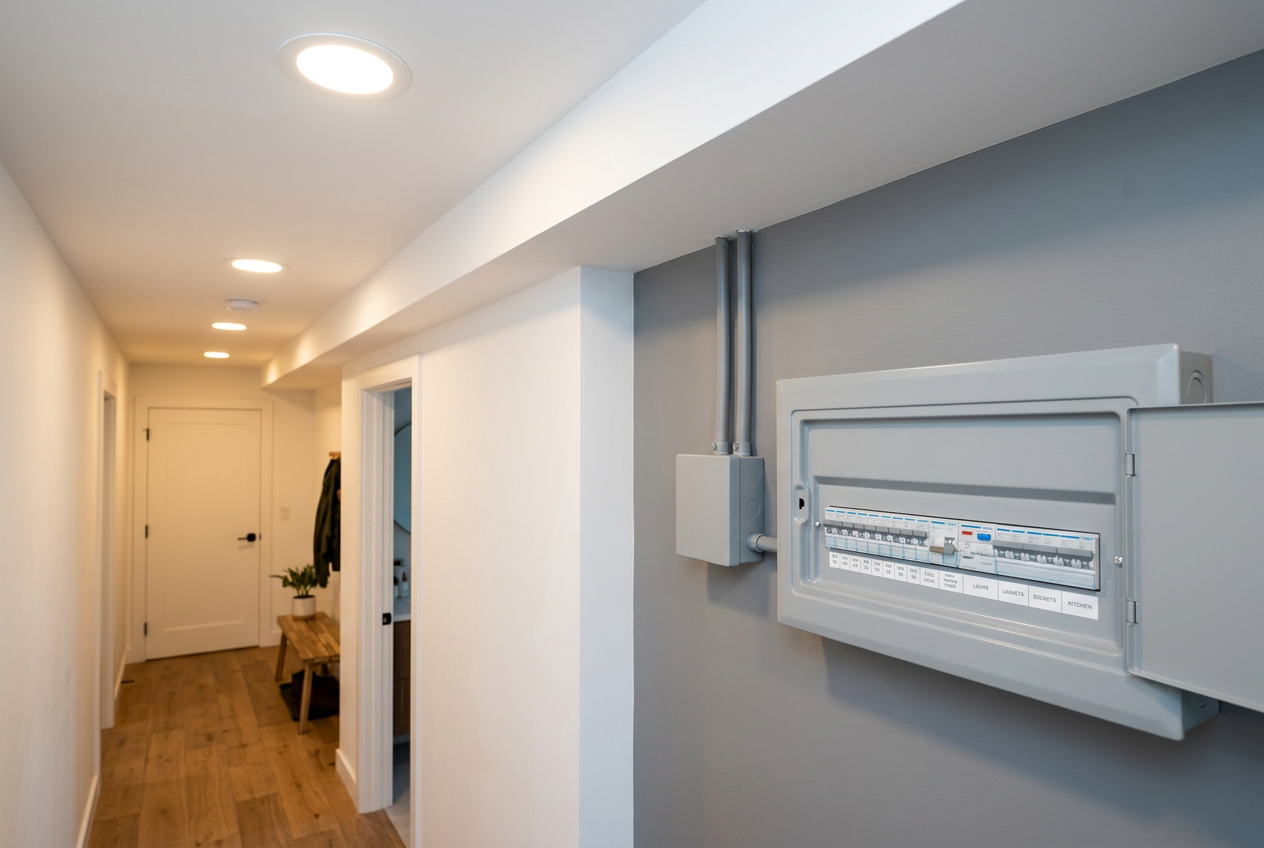
Adding a second light switch — for example, a two-way switch so you can control a light from both ends of a hallway — is a very common home improvement. However, in New Zealand, any work that involves connecting to or modifying your home's fixed electrical wiring is restricted electrical work and must be carried out by a registered electrician. This isn't just a technicality; it's a legal requirement under the Electricity Act 1992 and exists to protect you, your family, and your home.
What Is a Two-Way Switch?
A two-way switching setup lets you control a single light (or group of lights) from two separate switch locations. It's ideal for:
- Long hallways or staircases (switch at each end)
- Large open-plan rooms with multiple entry points
- Bedrooms where you want a switch near the door and another near the bed
The wiring involved requires a specific configuration using strappers (additional conductors between the two switches), which is more complex than a standard single switch installation.
Why This Is Restricted Electrical Work in NZ
Under the Electrical Workers Registration Board (EWRB) framework, restricted electrical work (REW) covers any work on fixed wiring in a home. This includes:
- Installing or replacing switches, sockets, or light fittings connected to fixed wiring
- Running new cable through walls or ceilings
- Modifying an existing circuit
Only a registered electrician (or a person under their direct supervision) can legally carry out this work. Once complete, the electrician must issue you a Certificate of Compliance (CoC), which is your proof that the work meets the NZ Building Code and the relevant electrical standards.
Safety note: Attempting DIY electrical wiring in NZ is illegal and dangerous. Faulty wiring is a leading cause of house fires and electrocution. It can also void your home insurance and create problems when you sell your property.
What a Homeowner CAN Do
While the wiring itself is off-limits, there are a few things you're allowed to do yourself:
- Replace a like-for-like switch (same type, same position, no new wiring) — though even this is a grey area and checking with EWRB or a registered electrician first is wise
- Choose the switch style, brand, and finish you'd like installed
- Prepare the wall area (e.g., patch painting after the electrician is done)
- Discuss the switch placement and circuit layout with your electrician before work begins
If you're unsure what you can and can't do, WorkSafe NZ provides guidance on electrical safety for homeowners.
What the Job Typically Involves
When a registered electrician adds a second light switch to an existing circuit, the process generally looks like this:
| Step | What Happens |
|---|---|
| 1. Assessment | Electrician checks the existing switch, circuit, and wiring route |
| 2. Cable run | New strapper cable is run between the two switch positions |
| 3. Switch installation | Both switches are wired in a two-way configuration |
| 4. Testing | Circuit is tested for correct operation and safety |
| 5. Certificate of Compliance | Electrician issues a CoC for the completed work |
The complexity — and therefore the time and cost — depends on how easy it is to run cable between the two switch locations. A straightforward job in a single-storey home with accessible ceiling space will be quicker than one requiring cable to be chased into solid concrete or brick walls.
Do You Need a Building Consent?
For most standard light switch additions, a building consent is not required — this type of electrical work typically falls under Schedule 1 of the Building Act 2004 as exempt work. However, requirements can vary depending on your specific situation and local council. Always confirm with your local council or check MBIE Building Performance if you're unsure. Your electrician will also be familiar with what's required in your area.
Choosing the Right Switch
Once you've engaged an electrician, you can choose from a wide range of switch styles available at retailers like Bunnings or Mitre 10. Popular options include:
- Standard rocker switches — affordable and widely available
- Flat-plate or grid switches — a more modern, sleek look
- Smart switches — allow app or voice control (your electrician can advise on compatibility)
Make sure any switch you purchase is rated for NZ/Australian standards (look for the RCM mark).
When to Call a Professional
You should always call a registered electrician for adding a second light switch — there are no exceptions to this rule in NZ. A qualified electrician will:
- Complete the work safely and to code
- Issue the required Certificate of Compliance
- Advise on the best switch placement and any potential issues with your existing circuit
- Spot any other wiring concerns while they're on-site
You can find a qualified, local electrician on tradedirectory.co.nz to get the job done right.